Ideas I haven’t sufficiently explored
A library is also a record of what you haven’t read yet.
Umberto Eco kept a personal library of some 30,000 books, most of them unread. Nassim Nicholas Taleb, describing it in The Black Swan (2007), called that collection an antilibrary. The unread books were the useful part. They marked what Eco knew he didn’t know.
I think of it as an unlibrary. This page is mine: five subjects I know I don’t know, each waiting for the right occasion to go in properly.
For each one there is a reason it is on the list, a first map of how I might get in, and the reading for every stop. The maps are preliminary. They will be wrong in places, which is what a first map is for.
The index
Five uncharted regions
- CosmologyWhere everything came from, and how anyone could know.
- Quantum mechanicsThe best-tested theory in physics, and still an argument about what it means.
- Mathematical and formal logicWhat follows from what, and the true things no system can prove.
- Music theoryStructure you hear before you can name it.
- Art appreciationLooking is a skill, and it improves with a teacher.
Region 01
Cosmology
Why it’s on the list
The largest question there is, answered with evidence. That second part is the draw.
Cosmology can’t run an experiment. There is one universe, seen from one place, and every conclusion has to be squeezed out of light that has been travelling for billions of years. It is a masterclass in reasoning from what you are able to observe.
A first map
Stop 1 · Door in
The expanding universe
How the Big Bang went from a guess to a finding. Redshifts, Hubble and the argument that followed.
- Big Bang
- Crash Course Astronomy
- A relation between distance and radial velocity among extra-galactic nebulae
Stop 2 · Core ideas
The hot early universe
The first few minutes, the making of the light elements and the microwave background left over from it.
- The First Three Minutes
- Cosmology Tutorial
- Frontiers and Controversies in Astrophysics
Stop 3 · Deeper ground
Doing the maths
The Friedmann equations, the ages and distances they give, and inflation. The point where it stops being a story.
- Introduction to Cosmology
- The Early Universe (8.286)
Stop 4 · Frontier
What nobody knows yet
Dark matter, dark energy, how it ends, and whether a science of a one-off object can be finished at all.
- The End of Everything (Astrophysically Speaking)
- The Nobel Prize in Physics 2019: popular science background
- Philosophy of Cosmology
Books
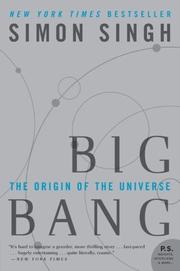
Stop 1 · Door in
Big Bang
Simon Singh, 2004
The history of the idea told as a detective story. The best door in, because it shows how the evidence arrived.
Google Books (opens in a new tab)
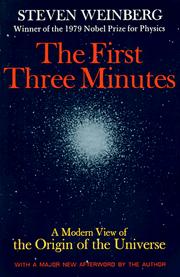
Stop 2 · Core ideas
The First Three Minutes
Steven Weinberg, 1977
A Nobel physicist walking through the early universe minute by minute. Short, exact and still the standard.
Google Books (opens in a new tab)
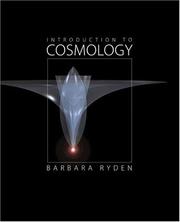
Stop 3 · Deeper ground
Introduction to Cosmology
Barbara Ryden, 2003
The undergraduate textbook. Calculus and patience are enough, and it is where the equations start.
Google Books (opens in a new tab)
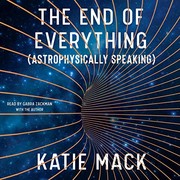
Stop 4 · Frontier
The End of Everything (Astrophysically Speaking)
Katie Mack, 2020
Five ways the universe might end, and what we would need to measure to tell them apart.
Google Books (opens in a new tab)
Papers, essays and free courses
- VideosCrash Course Astronomy (opens in a new tab)
Phil Plait, PBS · Stop 1
Short episodes from the solar system out to the Big Bang.
- PaperA relation between distance and radial velocity among extra-galactic nebulae (opens in a new tab)
Edwin Hubble, 1929 · Stop 1
Six pages and one scatter plot. The paper the expanding universe rests on.
- TutorialCosmology Tutorial (opens in a new tab)
Ned Wright, UCLA · Stop 2
An illustrated guide by a working cosmologist, with answers to the questions everyone asks.
- CourseFrontiers and Controversies in Astrophysics (opens in a new tab)
Charles Bailyn, Open Yale Courses · Stop 2
A full Yale lecture course for non-specialists, ending on dark energy.
- CourseThe Early Universe (8.286) (opens in a new tab)
Alan Guth, MIT OpenCourseWare · Stop 3
Inflation taught by the physicist who proposed it.
- EssayThe Nobel Prize in Physics 2019: popular science background (opens in a new tab)
Royal Swedish Academy of Sciences, 2019 · Stop 4
Why James Peebles’ physical cosmology earned the prize, in plain language.
- ReferencePhilosophy of Cosmology (opens in a new tab)
Stanford Encyclopedia of Philosophy · Stop 4
What is odd about studying a single object that contains the observer.
Region 02
Quantum mechanics
Why it’s on the list
The maths works to more decimal places than anything else in science. The people who use it most still disagree about what it says the world is.
That gap between a method that works and a meaning nobody agrees on turns up in education too. Quantum mechanics is the extreme case, and so the clearest one to learn from.
A first map
Stop 1 · Door in
Light behaving badly
Photons, probability amplitudes and the two-slit experiment, with no equations yet.
- QED: The Strange Theory of Light and Matter
- The Feynman Lectures on Physics, Volume III
Stop 2 · Core ideas
States and measurement
Spin, superposition, uncertainty and what a measurement does. The minimum maths to follow the argument.
- Quantum Mechanics: The Theoretical Minimum
- The Theoretical Minimum
Stop 3 · Deeper ground
The formalism
Wave functions, operators and the Schrödinger equation, worked properly.
- Introduction to Quantum Mechanics
- Quantum Physics I (8.04)
- Quantum computing for the very curious
Stop 4 · Frontier
What is actually real?
Entanglement, Bell’s theorem and the interpretations. Where physics and philosophy share a table.
- What Is Real?
- Quantum Computing Since Democritus
- Can quantum-mechanical description of physical reality be considered complete?
- The Nobel Prize in Physics 2022: popular science background
- Bell’s Theorem
Books
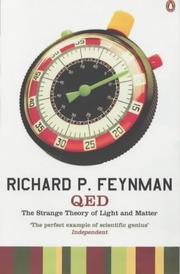
Stop 1 · Door in
QED: The Strange Theory of Light and Matter
Richard Feynman, 1985
Four public lectures that explain the theory with arrows on a page. The door in.
Google Books (opens in a new tab)
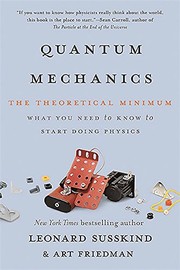
Stop 2 · Core ideas
Quantum Mechanics: The Theoretical Minimum
Leonard Susskind and Art Friedman, 2014
The real maths, no more than needed, written for adults who left physics at school.
Google Books (opens in a new tab)
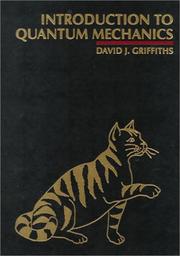
Stop 3 · Deeper ground
Introduction to Quantum Mechanics
David J. Griffiths, 1995
The undergraduate textbook most physicists learned from. Clear enough to teach yourself with.
Google Books (opens in a new tab)

Stop 4 · Frontier
What Is Real?
Adam Becker, 2018
A history of the interpretation fight, and of how one reading became the default without winning it.
Google Books (opens in a new tab)
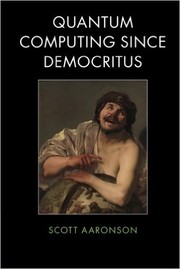
Stop 4 · Frontier
Quantum Computing Since Democritus
Scott Aaronson, 2013
Quantum theory read as a theory of information and probability. Opinionated and funny.
Google Books (opens in a new tab)
Papers, essays and free courses
- TextbookThe Feynman Lectures on Physics, Volume III (opens in a new tab)
Richard Feynman, Caltech · Stop 1
The quantum volume, free online, opening with the two-slit experiment.
- LessonsThe Theoretical Minimum (opens in a new tab)
Leonard Susskind, Stanford · Stop 2
The recorded Stanford lectures the book grew from.
- CourseQuantum Physics I (8.04) (opens in a new tab)
Allan Adams, MIT OpenCourseWare · Stop 3
MIT’s first course, filmed in full, with problem sets.
- TutorialQuantum computing for the very curious (opens in a new tab)
Andy Matuschak and Michael Nielsen · Stop 3
An essay with spaced-repetition questions built in, so the ideas are still there next month.
- PaperCan quantum-mechanical description of physical reality be considered complete? (opens in a new tab)
Einstein, Podolsky and Rosen, 1935 · Stop 4
The objection that started the entanglement argument.
- EssayThe Nobel Prize in Physics 2022: popular science background (opens in a new tab)
Royal Swedish Academy of Sciences, 2022 · Stop 4
How experiments with entangled photons tested Bell’s inequalities, for the Aspect, Clauser and Zeilinger prize.
- ReferenceBell’s Theorem (opens in a new tab)
Stanford Encyclopedia of Philosophy · Stop 4
The theorem, the loopholes and what closing them rules out.
Region 03
Mathematical and formal logic
Why it’s on the list
Logic is the study of what follows from what. Formal logic turns that into something you can calculate.
Then, in the 1930s, it proved its own limits: any consistent system rich enough for arithmetic leaves true statements it cannot prove. Computing grew out of the same work. Both halves matter to anyone whose job is making arguments.
A first map
Stop 1 · Door in
Puzzles first
Knights, knaves and paradoxes. The habits of formal thinking before any symbols.
- What Is the Name of This Book?
- Logicomix
Stop 2 · Core ideas
The formal language
Propositions, quantifiers, truth tables and proofs. Learning to write an argument as something checkable.
- forall x: Calgary
- Classical Logic
Stop 3 · Deeper ground
The limits of proof
Gödel’s incompleteness theorems and Turing’s machines. What formal systems can’t do, proved formally.
- Gödel’s Proof
- An Introduction to Gödel’s Theorems
- Gödel’s Incompleteness Theorems
- On computable numbers, with an application to the Entscheidungsproblem
Stop 4 · Frontier
Self-reference and minds
Where the limits meet computation, meaning and the question of what a mind is.
- Gödel, Escher, Bach
- Beginning Mathematical Logic: a study guide
- The Open Logic Project
Books
Stop 1 · Door in
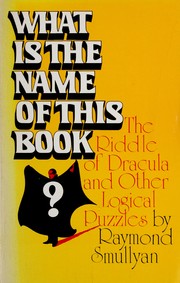
What Is the Name of This Book?
Raymond Smullyan, 1978
Logic puzzles that quietly build up to Gödel. The door in.
Google Books (opens in a new tab)

Stop 1 · Door in
Logicomix
Apostolos Doxiadis and Christos Papadimitriou, 2009
A graphic novel about Bertrand Russell and the search for foundations. The history, with the people left in.
Google Books (opens in a new tab)
Stop 3 · Deeper ground
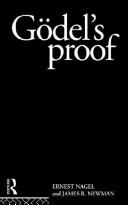
Gödel’s Proof
Ernest Nagel and James R. Newman, 1958
The incompleteness proof explained in about a hundred pages, and still the best short version.
Google Books (opens in a new tab)
Stop 3 · Deeper ground
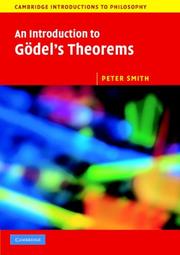
An Introduction to Gödel’s Theorems
Peter Smith, 2007
The proper treatment, written to be read by someone working alone.
Google Books (opens in a new tab)
Stop 4 · Frontier
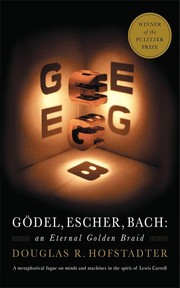
Gödel, Escher, Bach
Douglas Hofstadter, 1979
Self-reference in mathematics, art and music, stretched into a theory of mind. Better read after the proof than before it.
Google Books (opens in a new tab)
Papers, essays and free courses
- Textbookforall x: Calgary (opens in a new tab)
P. D. Magnus and Tim Button, Open Logic Project · Stop 2
A free, open introduction to formal logic, used as a university text.
- ReferenceClassical Logic (opens in a new tab)
Stanford Encyclopedia of Philosophy · Stop 2
The standard system laid out in one place, for checking your footing.
- ReferenceGödel’s Incompleteness Theorems (opens in a new tab)
Stanford Encyclopedia of Philosophy · Stop 3
What the theorems say and, as useful, what they are often misquoted as saying.
- PaperOn computable numbers, with an application to the Entscheidungsproblem (opens in a new tab)
Alan Turing, 1936 · Stop 3
The paper that defined computation in order to show what it can’t do.
- ReferenceBeginning Mathematical Logic: a study guide (opens in a new tab)
Peter Smith, Logic Matters · Stop 4
An annotated route through the whole subject, saying which book to read for each part.
- TextbookThe Open Logic Project (opens in a new tab)
Open Logic Project · Stop 4
Free advanced texts on sets, computability and incompleteness.
Region 04
Music theory
Why it’s on the list
Music is structure you hear before you can name it. Theory is the naming.
The interesting part is the gap between the two. Why does one chord feel like arriving and another like a question? How much of that is physics, how much is the brain and how much is the culture you grew up in?
A first map
Stop 1 · Door in
Learning to listen
Melody, rhythm, harmony and form, heard in real pieces before they are written down.
- What to Listen for in Music
- Listening to Music (MUSI 112)
Stop 2 · Core ideas
Notation and harmony
Reading the staff, scales, intervals, chords and how progressions move.
- musictheory.net lessons
- Fundamentals of Music Theory
Stop 3 · Deeper ground
Why it works on us
Expectation, tension and release. What the brain is doing, and how the rules changed across a century.
- This Is Your Brain on Music
- The Unanswered Question
- The Rest Is Noise
- Open Music Theory
Stop 4 · Frontier
The geometry of chords
Voice leading as geometry: chords as points in a space, and music moving through it.
- A Geometry of Music
- The geometry of musical chords
Books
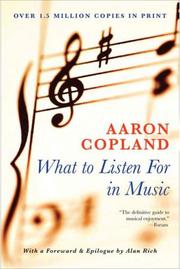
Stop 1 · Door in
What to Listen for in Music
Aaron Copland, 1939
A composer teaching the rest of us to hear what is there. The door in.
Google Books (opens in a new tab)
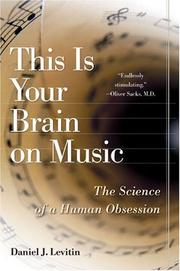
Stop 3 · Deeper ground
This Is Your Brain on Music
Daniel J. Levitin, 2006
A record producer turned neuroscientist on how pitch, rhythm and expectation are processed.
Google Books (opens in a new tab)

Stop 3 · Deeper ground
The Unanswered Question
Leonard Bernstein, 1976
The Harvard lectures that try to give music a grammar, borrowed from Chomsky. Ambitious, and filmed.
Google Books (opens in a new tab)
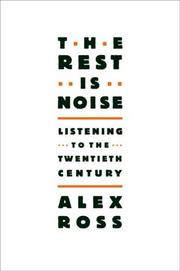
Stop 3 · Deeper ground
The Rest Is Noise
Alex Ross, 2007
The twentieth century through its music, and what happened when composers broke the rules above.
Google Books (opens in a new tab)

Stop 4 · Frontier
A Geometry of Music
Dmitri Tymoczko, 2011
One theory for why tonal music and jazz sound coherent, drawn as geometry.
Google Books (opens in a new tab)
Papers, essays and free courses
- CourseListening to Music (MUSI 112) (opens in a new tab)
Craig Wright, Open Yale Courses · Stop 1
Twenty-three lectures on how to listen, for students with no training.
- Lessonsmusictheory.net lessons (opens in a new tab)
musictheory.net · Stop 2
Short interactive lessons from the staff up to chord progressions, with drills.
- CourseFundamentals of Music Theory (opens in a new tab)
University of Edinburgh, Coursera · Stop 2
A structured, self-paced route through the basics.
- TextbookOpen Music Theory (opens in a new tab)
VIVA Open Publishing · Stop 3
A free, open textbook that runs from fundamentals to form and post-tonal theory.
- PaperThe geometry of musical chords (opens in a new tab)
Dmitri Tymoczko, Science, 2006 · Stop 4
The three-page paper the book expands on.
Region 05
Art appreciation
Why it’s on the list
Looking is a skill, and like any skill it improves with a teacher.
Art history is a long record of how people have looked, and of what a picture was for before it hung in a gallery. It is also a live argument about who decides what counts. That makes it a subject about attention and judgement as much as about objects.
A first map
Stop 1 · Door in
One picture at a time
Short, close looks at single works with someone who knows what to point at.
- What Are You Looking At?
- Smarthistory
- Art history
Stop 2 · Core ideas
The long story
A single narrative of Western art to hang everything else on, then the modern break.
- The Story of Art
- Modern Art & Ideas
Stop 3 · Deeper ground
How we see, and who decides
The eye as trained by its time, and the questions of who got to paint and whose looking counted.
- Ways of Seeing
- Painting and Experience in Fifteenth-Century Italy
- Why Have There Been No Great Women Artists?
Stop 4 · Frontier
What makes something art
Aesthetics and the art world. Why a urinal or a soup can could count, and what judgement is.
- The Artworld
- Aesthetic Judgment
Books

Stop 1 · Door in
What Are You Looking At?
Will Gompertz, 2012
A hundred and fifty years of modern art for the sceptical. The door in.
Google Books (opens in a new tab)
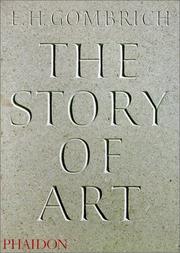
Stop 2 · Core ideas
The Story of Art
E. H. Gombrich, 1950
The single narrative most people start from. Worth reading to know what later writers argue with.
Google Books (opens in a new tab)

Stop 3 · Deeper ground
Ways of Seeing
John Berger, 1972
A short, sharp book on how images carry money, power and the male gaze.
Google Books (opens in a new tab)
Stop 3 · Deeper ground
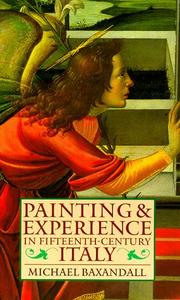
Painting and Experience in Fifteenth-Century Italy
Michael Baxandall, 1972
The “period eye”: how contracts, sermons and trade trained the way a patron looked.
Google Books (opens in a new tab)
Papers, essays and free courses
- VideosSmarthistory (opens in a new tab)
Beth Harris and Steven Zucker · Stop 1
Thousands of short, unscripted conversations in front of single works.
- LessonsArt history (opens in a new tab)
Khan Academy, with Smarthistory · Stop 1
The same material in order, from prehistory to now.
- CourseModern Art & Ideas (opens in a new tab)
The Museum of Modern Art, Coursera · Stop 2
MoMA’s own course, organised by theme rather than by movement.
- EssayWhy Have There Been No Great Women Artists? (opens in a new tab)
Linda Nochlin, ARTnews, 1971 · Stop 3
The essay that turned the question from talent to institutions.
- PaperThe Artworld (opens in a new tab)
Arthur Danto, The Journal of Philosophy, 1964 · Stop 4
Written after seeing Warhol’s boxes. Art as whatever a body of theory lets you see as art.
- ReferenceAesthetic Judgment (opens in a new tab)
Stanford Encyclopedia of Philosophy · Stop 4
Kant, Hume and after on what we are doing when we call something beautiful.