Library / Personal
Books
Reading beyond the field. Science fiction, unapologetically.
Why this shelf
Science fiction is the only literature that treats a designed system as a character. That is closer to my working life than most realism.
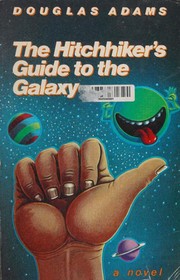
Book
The Hitchhiker's Guide to the Galaxy — Douglas Adams, 1979
The funniest book about bureaucracy ever written, disguised as space travel. I quote it more often than is professionally advisable.
 Best door in
Book
Exhalation — Ted Chiang, 2019
Each story takes one premise seriously and follows it all the way down. The best door in — short, and it shows what the form can do at full strength.
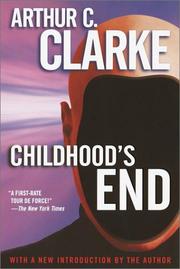
Book
Childhood's End — Arthur C. Clarke, 1953
A benevolent intervention that works exactly as intended, which turns out to be the problem. I think about it whenever a system design goes suspiciously smoothly.
Book
The Time Ships — Stephen Baxter, 1995
A sequel to Wells that takes the physics seriously and the melancholy more so. Better than it has any right to be.
- The Three-Body Problem
Book
The Three-Body Problem — Liu Cixin, 2006
Ideas at a scale most fiction will not attempt, with characters treated as a secondary concern. The trade is worth it.
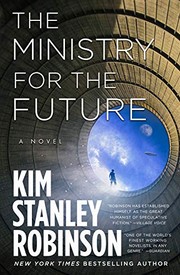
Book
The Ministry for the Future — Kim Stanley Robinson, 2020
Fiction as policy modelling. Half novel, half committee minutes, and the committee minutes are somehow the compelling half.
Book
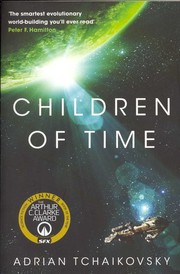
Children of Time — Adrian Tchaikovsky, 2015
An intelligence that evolves along genuinely different lines, worked out patiently over centuries. The most convincing non-human thinking I have read.

Book
Foundation — Isaac Asimov, 1951
The fantasy that a system can be predicted well enough to steer. I loved it at 15 and now read it as the cautionary tale it did not intend to be.
Rules
How this shelf is kept
- Nothing is here because it is famous. Several famous things are deliberately absent.
- Every entry carries one line in my own words on why it matters. No publisher blurbs.
- Every shelf names its best door in for a newcomer.
- Anything superseded is removed, not archived.
Nearby