Library / Personal
Cartoons
Cartoonists and comics worth serious attention.
Why this shelf
The most unforgiving compression problem in visual communication, and the only medium where failure is immediate and unmistakable.
 Best door in
Book
Understanding Comics — Scott McCloud, 1993
A book about comics that is really about how any sequence of images makes a reader do the work of inference. It explains itself in its own form, which is the point.

Book
Cartooning: Philosophy and Practice — Ivan Brunetti, 2011
A drawing course that is mostly about seeing. Brutally short, and the exercises are harder than they look.

Book
The Complete Maus — Art Spiegelman, 1996
The book that made the argument about what the form could carry unanswerable. The frame story is the part I keep returning to.
Book
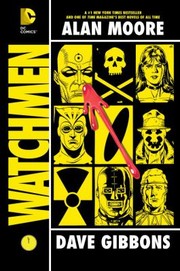
Watchmen — Alan Moore & Dave Gibbons, 1987
A nine-panel grid used as a structural constraint for 400 pages. The most rigorous piece of visual design on this shelf.
Book
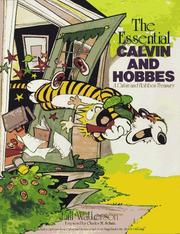
The Essential Calvin and Hobbes — Bill Watterson, 1988
Four panels, no wasted line, and a running argument about imagination and constraint. The strip that taught me compression before I knew the word.
Book
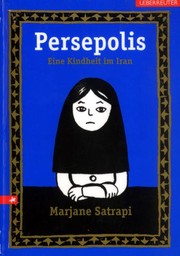
Persepolis — Marjane Satrapi, 2000
Stark black and white doing work that photographs could not. The restriction is what makes the child’s viewpoint hold.
Book
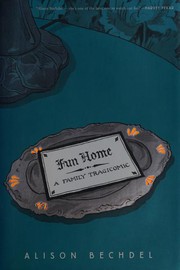
Fun Home — Alison Bechdel, 2006
Dense, literary, and structured like a spiral rather than a line. It rewards rereading in a way few comics attempt.
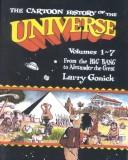
Book
The Cartoon History of the Universe — Larry Gonick, 1990
Serious history, properly sourced, drawn with jokes. The clearest demonstration I know that rigour and delight are not opposed.
Rules
How this shelf is kept
- Nothing is here because it is famous. Several famous things are deliberately absent.
- Every entry carries one line in my own words on why it matters. No publisher blurbs.
- Every shelf names its best door in for a newcomer.
- Anything superseded is removed, not archived.
Nearby