Library / Professional
Design thinking
Design method, its uses, and its honest critics.
Why this shelf
It is the method I was schooled in and the one I am most wary of, because it is easy to run the workshop and skip the thinking.
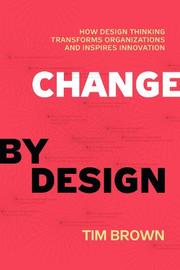 Best door in
Book
Change by Design — Tim Brown, 2009
The statement of the case from IDEO. Read it for the argument, and read the critics before you run anything based on it.
Book
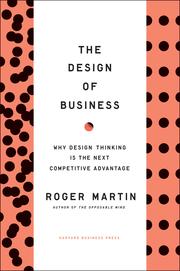
The Design of Business — Roger Martin, 2009
On the tension between reliability and validity — between doing the same thing well and finding out whether it is the right thing. That tension is most of my job.

Book
Designing for Growth — Jeanne Liedtka & Tim Ogilvie, 2011
Four questions instead of five stages, which turns out to be a much better structure for people who will not be running a second workshop.
Book
101 Design Methods — Vijay Kumar, 2012
A catalogue rather than an argument. I use it the way you use a reference — to find the move that fits, not to read through.
Book
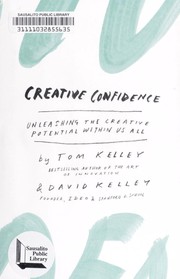
Creative Confidence — Tom Kelley & David Kelley, 2013
The motivational end of the shelf. Its real contribution is naming the fear of judgement as the actual obstacle, which matches what I see in rooms.

Book
Speculative Everything — Anthony Dunne & Fiona Raby, 2013
Design used to ask questions rather than solve problems. The bridge between this shelf and futuring, and the most intellectually serious thing here.

Book
The Field Guide to Human-Centered Design — IDEO.org, 2015
The methods stripped to something a small team can run without a facilitator. Free, and refreshingly unprecious about it.
Book
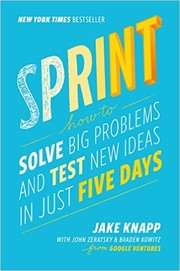
Sprint — Jake Knapp, John Zeratsky & Braden Kowitz, 2016
Five days, tightly scripted. Its constraint is its argument — most design processes fail from having too much time, not too little.
Rules
How this shelf is kept
- Nothing is here because it is famous. Several famous things are deliberately absent.
- Every entry carries one line in my own words on why it matters. No publisher blurbs.
- Every shelf names its best door in for a newcomer.
- Anything superseded is removed, not archived.
Nearby