Library / Professional
Maker education
Making as a route to understanding — constructionism through to current practice.
Why this shelf
Because building something is the fastest way to discover what you actually understand, and the slowest thing to argue for in a curriculum meeting.
 Best door in
Book
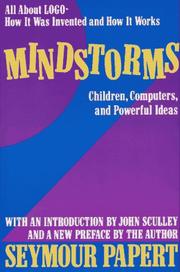
Mindstorms — Seymour Papert, 1980
The origin of the argument, and still the most radical statement of it. Papert wanted children to program the computer, not the other way round.

Book
Making Is Connecting — David Gauntlett, 2011
On making as a social act rather than a solitary one. It reframed my thinking about why a makerspace with nobody in it is just a room with tools.

Book
Invent to Learn — Sylvia Libow Martinez & Gary S. Stager, 2013
The practical descendant of Mindstorms. Honest about the difference between a project that looks like making and one that requires thought.

Book
Zero to Maker — David Lang, 2013
One person learning to make things, documented as it happened. A useful corrective to accounts written by people who already knew how.
Book
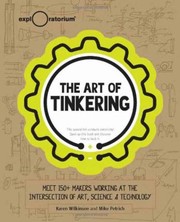
The Art of Tinkering — Karen Wilkinson & Mike Petrich, 2014
The Exploratorium’s case that tinkering is a legitimate way of knowing. It gave me language for the value of work that has no predetermined outcome.

Book
Meaningful Making — Paulo Blikstein, Sylvia Libow Martinez & Heather Allen Pang, 2016
Practitioner accounts including the ones that went badly. The failures are documented, which is rarer than it should be.

Book
Maker-Centered Learning — Edward P. Clapp et al., 2016
Project Zero’s attempt to say what is actually being learned. Their answer — seeing the designed world as changeable — is the most defensible I have found.

Book
Lifelong Kindergarten — Mitchel Resnick, 2017
Projects, passion, peers, and play, argued by the person behind Scratch. The clearest short account of why the kindergarten model should not stop at six.
Rules
How this shelf is kept
- Nothing is here because it is famous. Several famous things are deliberately absent.
- Every entry carries one line in my own words on why it matters. No publisher blurbs.
- Every shelf names its best door in for a newcomer.
- Anything superseded is removed, not archived.
Nearby