Library / Professional
Learning spaces
Space, participation, routines, and what buildings teach.
Why this shelf
Because the room is already making decisions about who can speak and who can be seen, and most briefs treat it as an empty container.
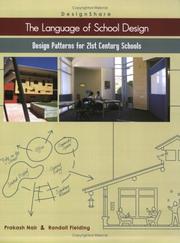
Book
The Language of School Design — Prakash Nair & Randall Fielding, 2005
A pattern language for schools. I disagree with a fair share of the patterns, which is what makes it useful — it gives you something specific to disagree with.

Book
Learning Spaces — Diana G. Oblinger, 2006
The moment higher education started taking informal space seriously. Dated in its technology and still right about where learning actually happens on a campus.
- Designing Spaces for Effective Learning
Paper
Designing Spaces for Effective Learning — JISC, 2006
A short guide that puts activity before furniture, years before that became the standard line. The one I hand to people who want a place to start.

Book
The Design of Learning Spaces — Pamela Woolner, 2010
The most honest account of how thin the evidence is, written by someone who still thinks the work matters. That combination is rare.
 Best door in
Book
The Third Teacher — OWP/P Architects, VS Furniture & Bruce Mau Design, 2010
79 ideas, beautifully made, several of them unsupported. I keep it because it is the fastest way to make someone care about the question, then argue about the answers.

Book
Towards Creative Learning Spaces — Jos Boys, 2011
The sharpest critique of the flexible-space orthodoxy I have read, from inside architecture rather than outside it.
- School Design Together
Book
School Design Together — Pamela Woolner, 2015
On participatory design with the people who will live in the building. The chapters on how consultation goes wrong are worth the whole volume.
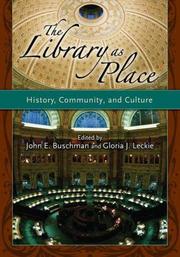
Book
The Library as Place — John E. Buschman & Gloria J. Leckie, 2007
A study of the one public learning space nobody is required to enter. What keeps people there turns out to have little to do with the books.
Rules
How this shelf is kept
- Nothing is here because it is famous. Several famous things are deliberately absent.
- Every entry carries one line in my own words on why it matters. No publisher blurbs.
- Every shelf names its best door in for a newcomer.
- Anything superseded is removed, not archived.
Nearby