Library / Professional
Visual communication
Diagrams, information design, and making an argument visible.
Why this shelf
If a framework cannot be drawn it is probably not finished. This shelf is how I test that claim on my own work.

Book
The Visual Display of Quantitative Information — Edward R. Tufte, 1983
Still the argument that a diagram is a claim, and that decoration is usually a claim you did not mean to make.

Book
Presentation Zen — Garr Reynolds, 2008
Restraint as a discipline rather than a style. It made me willing to put one word on a slide and talk for two minutes.
Book
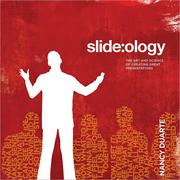
slide:ology — Nancy Duarte, 2008
The craft underneath the restraint — hierarchy, contrast, and how a diagram earns its space. More technical than it first appears.

Book
Resonate — Nancy Duarte, 2010
Presentation as narrative structure. The analysis of how a talk moves between what is and what could be is the part I actually use.
Book
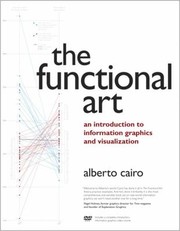
The Functional Art — Alberto Cairo, 2012
Grounds visual choices in how the eye and brain process them, so the rules stop being taste and start being reasons.
 Best door in
Book
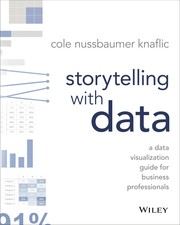
Storytelling with Data — Cole Nussbaumer Knaflic, 2015
The most immediately actionable book here. Before-and-after examples that teach by making you notice what was wrong the first time.
Book
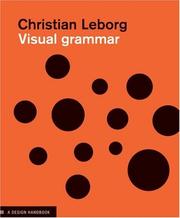
Visual Grammar — Christian Leborg, 2006
A vocabulary for visual relationships, stripped of any application. Abstract enough to be useful everywhere.
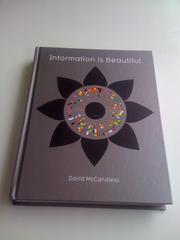
Book
Information Is Beautiful — David McCandless, 2009
Here as the counterweight. Several of these visualisations would not survive Tufte, and holding both positions is more honest than resolving them.
Rules
How this shelf is kept
- Nothing is here because it is famous. Several famous things are deliberately absent.
- Every entry carries one line in my own words on why it matters. No publisher blurbs.
- Every shelf names its best door in for a newcomer.
- Anything superseded is removed, not archived.
Nearby